American Bald Eagle: A Designer’s Stitch-Out Review
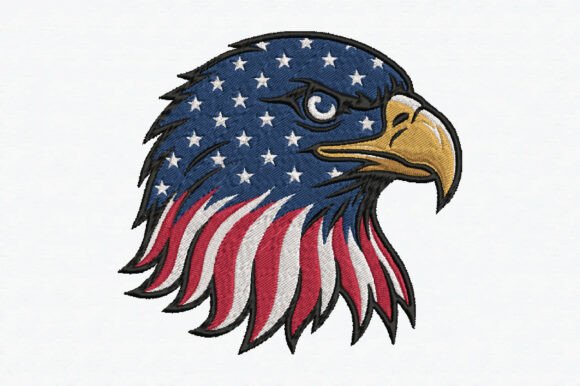
As an embroidery professional who has stitched out countless patriotic motifs for client projects and shop inventory, I approach every new machine embroidery design with a critical eye. It is not enough for a graphic to look good on a screen; it must translate into thread, texture, and tangible value. When evaluating the American Bald Eagle design featuring a bold USA flag-inspired head, my primary focus is on how this artwork performs when needle meets fabric. This review breaks down the practical realities of using this specific embroidery file for real-world applications, from biker jackets to boutique merchandise.
First Impressions and Visual Weight
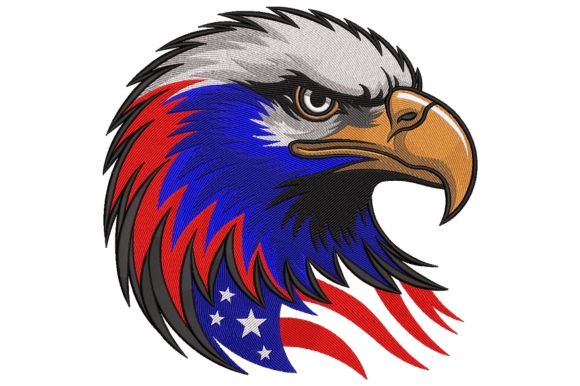
The immediate impact of this American Bald Eagle design is its commanding presence. Unlike stylized or cartoonish interpretations, this artwork leans into a bold, semi-realistic aesthetic that demands respect. The integration of the flag elements within the eagle’s head creates a layered visual narrative that works exceptionally well for Independence Day projects without feeling kitschy. From a digitizing perspective, the shape suggests a balance between fill stitch areas for the feathers and likely satin stitch borders or detailing to define the beak and eye.
For a designer, this visual weight is crucial. It tells me immediately that this is not a delicate accent piece; it is a centerpiece. The layout feels substantial, making it ideal for projects where the embroidery needs to hold its own against heavy fabrics or compete with other visual elements like zippers, seams, or pocket placements. If you are curating a collection for a craft business or updating an Etsy listing, this design projects professionalism and heritage rather than fast-fashion novelty.
Real-World Application: The Custom Biker Jacket Back Patch
To truly test the viability of this American Bald Eagle design, I mentally placed it in one of the most demanding scenarios mentioned in the product description: a biker jacket back patch. Leather and heavy denim are unforgiving substrates. They require a design with enough stitch density to prevent the fabric grain from showing through, but not so much that the needle perforations weaken the material.
In this scenario, the flag-inspired eagle head serves as a powerful focal point. However, success here depends entirely on your preparation. For a custom apparel project of this magnitude, I would treat this as a potential applique design opportunity if the file supports it, or ensure the fill stitches are directional to mimic feather flow. On a leather jacket, the contrast of the red, white, and blue threads against black or brown hide creates a striking effect, but only if the thread colors are vibrant and colorfast. A muddy red or faded blue will cheapen the entire garment. This design earns its keep on outerwear because the bold lines remain legible even from a distance, which is essential for motorcycle culture aesthetics.
Versatility Across Products and Fabrics
Beyond heavy outerwear, this American Bald Eagle motif shows promise for a variety of handmade products. I can easily visualize this working beautifully on canvas tote bags, where the natural texture of the fabric complements the rugged nature of the eagle. For tote bag design, the key is ensuring the stabilizer is robust enough to prevent puckering, as canvas can shift under dense stitching.
However, versatility has limits. While this design is perfect for sweatshirts, caps, and aprons, I would exercise extreme caution before using it for baby embroidery or lightweight summer tees. The "bold" descriptor implies density. On thin knits or stretchy jersey, a dense patriotic eagle can create a bulletproof vest effect—a stiff, uncomfortable area that drapes poorly and may irritate sensitive skin. If you intend to use this for children's items, verify the stitch count and consider resizing significantly or choosing a lighter variation. Always prioritize the wearability of the finished product over the size of the design.
Navigating Technical Challenges and Fabric Texture
Every embroidery project presents unique hurdles. With a detailed animal portrait like this American Bald Eagle, the transition zones between different colored sections are critical. Poorly digitized transitions result in gaps or overlapping bulk. Before committing this to a client’s expensive jacket or a high-margin small shop product, you must inspect the design’s architecture.
- Stabilizer Selection: Do not rely on tear-away alone for this design. The complexity of the flag details and the eagle’s shading requires a cut-away stabilizer to maintain registration, especially on knits or textured fabrics.
- Hoop Size Verification: Ensure your hoop size accommodates the design with adequate margin. Cramping a bold eagle into the maximum stitch area of a hoop increases the risk of flagging and misalignment.
- Fabric Texture Compatibility: On pique polos or terry cloth towels, fine details in the eagle’s face may get lost. Consider using a water-soluble topping to keep the stitches crisp and visible above the fabric pile.
- Thread Contrast: Test your palette. Navy blue on black fabric disappears. White on cream vanishes. The patriotic theme relies on distinct separation of values to read correctly.
Commercial Viability for Sellers and Makers
For Etsy sellers and creative entrepreneurs, this American Bald Eagle is more than just a pretty picture; it is a commercial asset. Its strong association with patriotism makes it a reliable seller year-round, with predictable spikes during Memorial Day, Flag Day, and the Fourth of July. However, buyer engagement hinges on presentation. When creating a printable mockup or photographing a sample, ensure the lighting captures the sheen of the thread. Flat, matte photos fail to convey the dimensionality of the embroidery.
If you are selling digital embroidery files or finished goods, transparency builds trust. Clearly state the dimensions, recommended fabrics, and any specific stabilizer requirements in your listing. Customers appreciate knowing that a design has been tested. Furthermore, always confirm the licensing terms associated with this specific file. Just because a design is available for purchase does not automatically grant unlimited commercial rights for mass production or digital resale. Protecting your craft business means respecting intellectual property and ensuring you have the right to monetize the design assets you use.
Designer Notes for a Professional Finish
Before you load this American Bald Eagle into your machine for a final run, adopt these professional habits to ensure quality:
- Always Test Stitch: Never assume a digital file is flawless. Run a test on scrap fabric that matches your final project’s weight and weave. Check for registration errors between the flag stripes and the eagle’s outline.
- Evaluate Density: Feel the test swatch. Is it too stiff? Too loose? Adjust your machine’s tension or modify the density in your software if necessary to suit the end-use.
- Check Small Details: Inspect the eye and beak. These are the personality centers of the design. If they are muddy or undefined at the intended size, the design may need to be enlarged or edited.
- Mockup in Black and White: Viewing the design in grayscale helps you assess value contrast independent of color. If the eagle blends into the background in black and white, it will lack pop in thread.
- Wash Test: If this is for a personalized gift or apparel meant to be laundered frequently, wash and dry your test swatch. Patriotic colors, especially red, can sometimes bleed or fade. Verify colorfastness before delivery.
Ultimately, the American Bald Eagle embroidery design offers significant potential for makers who respect the technical demands of bold, thematic artwork. By approaching it with a tester’s mindset and a designer’s attention to detail, you can transform a digital file into a stunning, professional-grade product that resonates with customers and celebrates American pride with integrity.